Most boat AC failures aren't what you'd expect. Here's why marine systems break down differently — and why the wrong technician makes it worse.
Share:
Summary:
If you’ve ever had a home AC tech look at your boat’s system and walk away scratching his head, you already know something is off. Marine air conditioning isn’t a smaller version of what’s in your house. It’s a fundamentally different machine, operating in a fundamentally different environment, with failure modes that most HVAC technicians have never encountered. That gap — between what a general contractor knows and what your boat actually needs — is where most repair calls go sideways. Here’s what’s actually going on inside your system, and why it matters before you call anyone for help.
The single biggest difference between a marine AC system and a residential one is what it uses to reject heat. A home unit pushes hot air outside. Our marine systems pull seawater in through a through-hull fitting, run it through the condenser to absorb heat, and pump it back out. That’s it — seawater is the cooling medium, not air.
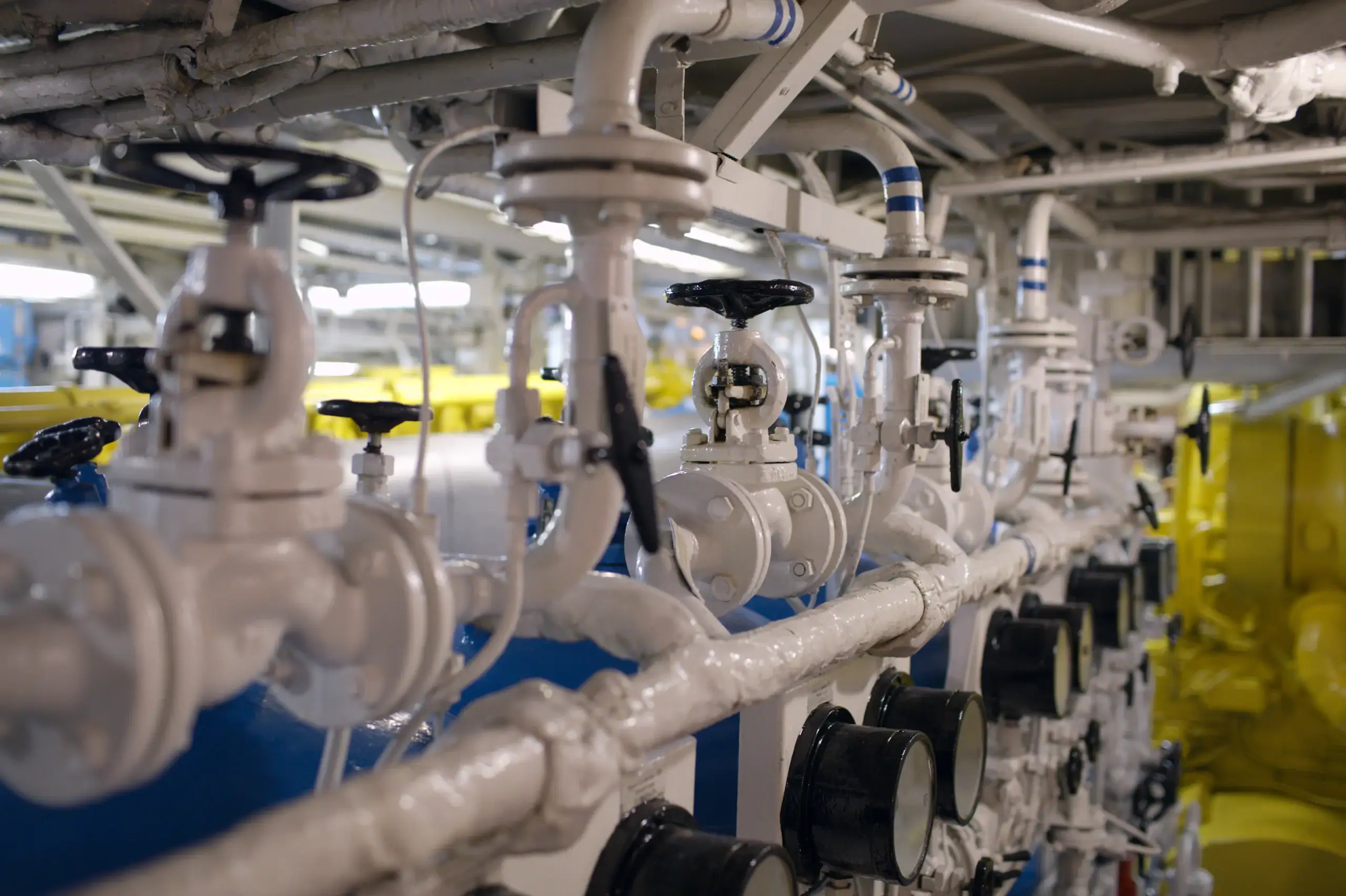
This means your boat’s AC system has an entire subsystem that residential units don’t have at all: a raw water pump, a seawater strainer, through-hull fittings, and a seawater condenser. When any one of those components fails or gets restricted, the whole system stops cooling — even if the refrigerant loop is perfectly fine.
That’s the part most general HVAC technicians miss entirely.
A residential HVAC technician is trained to look at the refrigerant loop. Pressures, temperatures, compressor function, electrical connections — that’s the diagnostic playbook they know. And for a home unit, that playbook is usually complete. But on a boat, it covers maybe half the picture.
When a general contractor comes aboard and checks your refrigerant levels, finds them fine, and still can’t figure out why the system isn’t cooling, it’s usually because they don’t know to look at the seawater side. A clogged raw water strainer — packed with barnacles, algae, or the kind of marine growth that builds up fast in the Great South Bay or Long Island Sound — can cut seawater flow enough to make the whole system shut down on its thermal protection switch. The compressor is fine. The refrigerant is fine. The strainer is the problem. And if you don’t know to look there, you’ll never find it.
There’s also the vibration factor. Boats move constantly, even at the dock. That motion works on every connection in the system over time — refrigerant line fittings, electrical terminals, mounting hardware. A connection that’s perfectly tight on a residential unit can work itself loose on a vessel after a single season. A tech who isn’t thinking about vibration as a failure mechanism will overlook it on a diagnostic.
Salt air compounds everything. Coastal environments corrode HVAC metal components nearly twice as fast as inland units, and on a boat, you’re not just dealing with salt air — you’re dealing with salt spray, humidity, and the constant presence of seawater in the system itself. Standard HVAC components aren’t built for that. Marine-grade materials — titanium heat exchangers, epoxy-coated components, bronze fittings — exist specifically because the standard stuff fails fast in this environment.
The result of sending the wrong technician is predictable: a service call that costs money, produces no diagnosis, and leaves you with a system that still doesn’t work. Or worse — a repair using non-marine-grade parts that holds for a few weeks and then fails again.
Nassau County, NY is the busiest recreational boating county in New York State, with roughly 38,000 registered recreational boats — and the conditions here are genuinely demanding on marine AC systems. You’ve got saltwater on both shores: Long Island Sound to the north, the Great South Bay and Atlantic to the south. Each presents different challenges, but neither is forgiving on cooling equipment.
The south shore’s inshore waters — the bays, channels, and dredged waterways around Island Park, East Atlantic Beach, and Hewlett Neck — are warmer and nutrient-rich, which means marine growth builds up faster. Seawater strainers that might stay clear for weeks in colder offshore water can clog in days during a hot July in the bay. If you’re not checking that strainer regularly, your AC is working harder than it needs to — or not working at all.
There’s another failure mode that’s specific to Nassau County marinas in the summer: voltage sag. On a hot weekend when every boat in the marina is running its AC simultaneously, the dock’s electrical grid can drop voltage enough to trigger the low-voltage cutoff built into most marine AC units. The system shuts off to protect the compressor. From the owner’s perspective, the AC just stopped working. A technician who doesn’t know to check shore power voltage will spend time looking at the wrong things entirely.
Add to this the compressed boating season — Memorial Day to Labor Day, roughly 14 weeks — and you have a situation where demand for qualified marine AC technicians spikes hard and fast. The region’s limited pool of specialists fills up quickly. We’ve heard from Nassau County boat owners who waited nearly 10 weeks for a service call from another provider during peak season. That’s most of the summer gone.
Want live answers?
Connect with a Chill Xpert Solutions expert for fast, friendly support.
A proper marine air conditioning repair doesn’t start with the refrigerant. It starts with the seawater side — checking flow through the strainer, verifying the raw water pump is pulling correctly, confirming there’s no restriction at the through-hull fitting. If seawater flow is good, then we move to the refrigerant loop, the electrical system, the compressor, and the controls.
That sequence matters. It’s also the sequence that separates a technician who knows marine systems from one who doesn’t. Skipping the seawater diagnostic and jumping straight to refrigerant checks is the single most common reason boat AC repairs fail to solve the actual problem.
In our experience working on vessels across Nassau County and Suffolk County, the failures we see most often fall into a few predictable categories — and most of them have nothing to do with the refrigerant.
Restricted seawater flow is the leading culprit. A clogged strainer, a failing raw water pump, or a partially blocked through-hull fitting reduces the system’s ability to reject heat. The condenser temperature climbs, the system hits its thermal limit, and it shuts off. This is often mistaken for a compressor failure or a refrigerant problem, but the fix is much simpler — and much cheaper — if you catch it early.
Dirty condenser coils are the second most common issue. Salt and marine growth accumulate on the coils over time, and that buildup acts as an insulating layer between the refrigerant and the seawater. Efficiency drops. The system has to work harder to achieve the same cooling output. We’ve seen condenser coils so fouled that efficiency had dropped by more than 30 percent — meaning the system was burning significantly more power to deliver noticeably less cooling. A thorough cleaning restores performance without any parts replacement at all.
Refrigerant leaks do happen, but they’re less common than most people assume. Because marine refrigerant lines are under constant vibration stress, connections can work loose gradually over a season. A slow leak won’t be obvious until the system is noticeably underperforming. Recharging refrigerant without finding and fixing the source of the leak is a temporary fix at best — the charge will bleed out again and you’ll be back to square one.
Electrical issues round out the list. Shore power problems, corroded terminals, and voltage sag from marina grid stress can all present as AC failures. Checking the electrical side of the system — not just the mechanical and refrigerant components — is part of a complete marine diagnostic.
The best time to find out your marine AC has a problem is in April, not July. Pre-season aircon servicing catches the issues that develop over winter — corrosion on electrical connections, marine growth in the seawater strainer, refrigerant that’s leaked down slowly over months of inactivity — before they strand you on a hot weekend with a boat full of guests.
Regular air con servicing on a marine system covers more ground than most people realize. It’s not just checking refrigerant levels and calling it done. A thorough service includes cleaning the condenser coils, inspecting and flushing the seawater strainer, verifying raw water pump function, checking through-hull fittings for restriction or corrosion, testing electrical connections for corrosion or looseness, and confirming the system is sized and performing correctly for the vessel’s current load.
That last point matters more than it gets credit for. A system that was correctly sized for a boat five years ago may be undersized if the vessel has been modified — added cabin space, additional electronics generating heat, a change in how the boat is used. An undersized system running continuously in a Nassau County summer will age years faster than one that’s appropriately matched to the load.
With proper maintenance, quality marine AC systems can last 7 to 10 years reliably — and well-maintained systems have been documented running for 20 years. Without it, you’re looking at failures that come earlier, cost more, and happen at the worst possible time. The math on pre-season servicing is straightforward: a routine inspection costs far less than an emergency repair call on a Saturday afternoon in August.
One thing worth knowing: any technician who services, repairs, or handles refrigerant on a marine AC system is federally required to hold EPA Section 608 certification under the Clean Air Act. It’s not optional, and it’s not a technicality. If the technician working on your boat’s refrigerant can’t confirm that credential, the work isn’t being done legally. Our technicians carry EPA 608 certification as a baseline — it’s a minimum standard, not a selling point.
Marine AC repair isn’t complicated when the right person is doing it. It becomes complicated when the wrong person is doing it — and in Nassau County, where the boating season is short and the demand for qualified technicians is high, the cost of that mistake is a summer without a working system.
The difference between a repair that holds and one that doesn’t comes down to whether the technician understands the seawater cooling system, uses marine-grade components, and actually knows the failure modes specific to boats operating in saltwater environments. Those aren’t minor details — they’re the whole job.
If you’re dealing with a marine AC issue or want to get ahead of one before the season starts, we’ve been doing this work across Nassau County for over 40 years. Reach out for a free estimate and talk to someone who actually knows what they’re looking at.
—
FREQUENTLY ASKED QUESTIONS
**Can local mini split installers work on my boat’s AC?** No — and this is one of the most common and costly mistakes Nassau County, NY boat owners make. Residential mini split systems are air-cooled. Marine AC systems are seawater-cooled. The installation, diagnostic, and repair procedures are fundamentally different. A local mini split installer has no training in raw water pumps, seawater strainers, through-hull fittings, or the corrosion and vibration dynamics specific to marine environments. Calling a residential mini split installer for a marine AC problem is likely to produce an inconclusive diagnosis, a wasted service call, and a system that still doesn’t work.
**How do I know if my boat’s AC needs repair or full replacement?** That depends on the age of the system, the nature of the failure, and whether the components are still serviceable. A system under 10 years old with a specific, isolated failure — a clogged strainer, a failed pump, a refrigerant leak at a fitting — is almost always worth repairing. A system that’s failing across multiple components, running inefficiently despite servicing, or no longer correctly sized for the vessel is a better candidate for replacement. We can give you a clear answer after a proper diagnostic — not before.
**Why does my boat’s AC work fine at anchor but struggle at the dock in Nassau County marinas?** This is often a marina electrical issue rather than a system problem. On hot summer weekends in Nassau County marinas — particularly along the south shore communities — when multiple boats are running their AC simultaneously, the dock’s electrical grid can experience voltage sag. Most marine AC units have a low-voltage cutoff that shuts the compressor down to prevent damage. The system appears to fail, but the actual issue is the shore power supply. A marine technician who knows to check voltage at the dock connection will find this quickly. One who doesn’t will spend time looking at the wrong components.
**How long should a marine AC system last?** With proper maintenance — regular condenser coil cleaning, strainer inspection, refrigerant checks, and electrical servicing — quality marine AC systems typically deliver 7 to 10 years of reliable service. Well-maintained systems have been documented running for 20 years. Systems that are neglected, serviced by non-specialists, or repaired with non-marine-grade components tend to fail much sooner. The environment in Nassau County, NY — saltwater on both shores, hot and humid summers, compressed boating seasons — makes consistent maintenance more important here than in most markets.
Article details:
Share:
Continue learning: