Long Island boat owners face unique challenges with marine air conditioning systems. Discover the real reasons systems fail and the prevention strategies that actually work.
Share:
Summary:
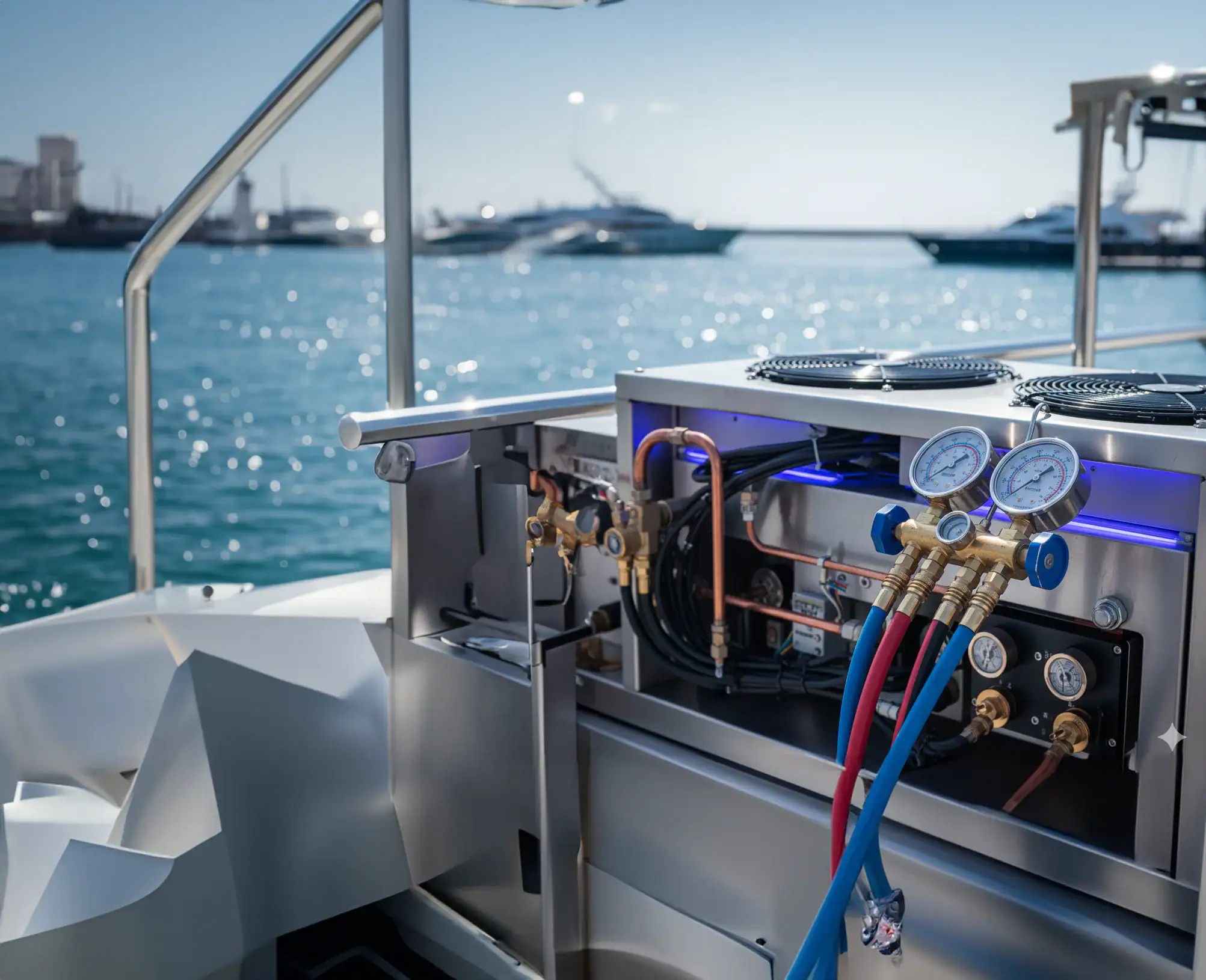
Saltwater isn’t just around your boat—it’s actively attacking your marine HVAC system. Long Island’s coastal environment creates the perfect conditions for accelerated corrosion: salt air, constant humidity, and seasonal temperature swings that residential HVAC equipment was never designed to handle.
Salt particles settle on aluminum fins, copper tubes, and steel components throughout your system. These particles pull moisture from the air, creating the combination that eats through metal. Your condenser coil takes the worst of it. Copper tubes attached to aluminum fins create a corrosion hotspot where the two metals meet. As they erode, contact breaks down, refrigerant leaks develop, and high-pressure problems force your system to shut down.
The damage builds over time. A thin salt film becomes active corrosion. Corroded coils can’t transfer heat efficiently, so your system works harder for weaker results. Eventually, you lose cooling capacity entirely or the safety systems trigger shutoffs to protect the compressor from damage.
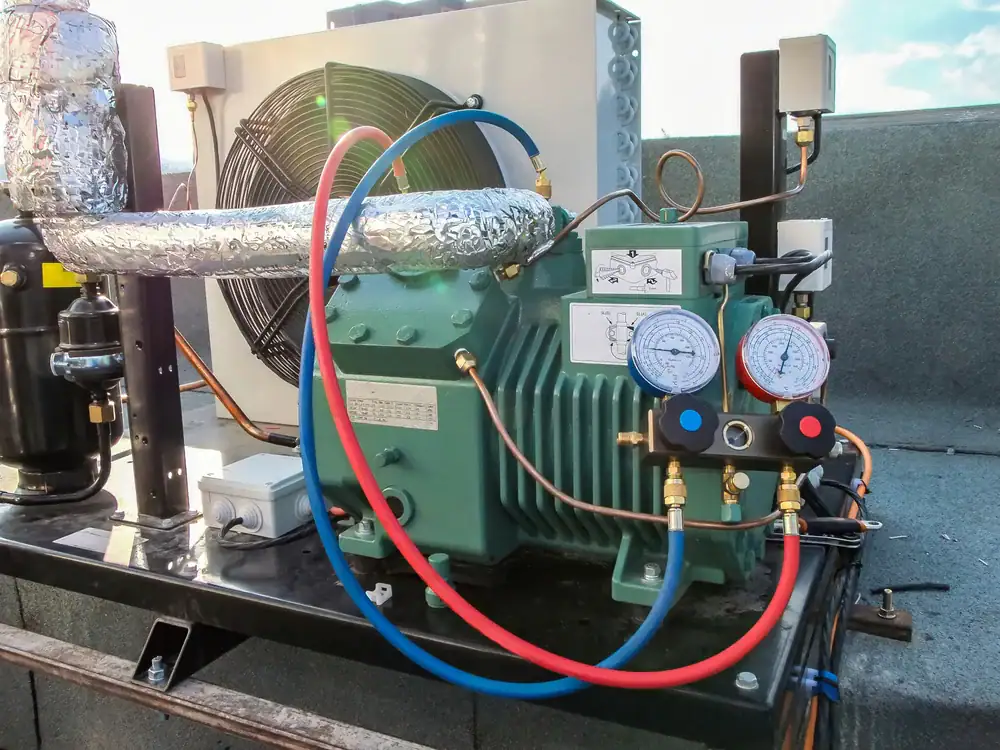
Long Island boat owners deal with environmental conditions that destroy marine air conditioning faster than most other regions. Whether you’re keeping your boat in a Long Island Sound marina on the north shore or a Great South Bay slip on the south shore, you’re facing constant saltwater exposure and the corrosion that comes with it.
The humidity around local marinas never lets salt fully dry. It stays active on metal surfaces, continuously corroding components. Summer heat in Nassau and Suffolk County makes compressors run harder, increasing operating temperatures and stress on already-compromised parts. Winter storage, when not done correctly, allows moisture to settle inside systems and freeze, damaging seals and gaskets.
The numbers tell the story. Marine HVAC systems experience component degradation 30% faster than land-based units. Copper components corrode up to four times faster in saltwater environments. Translation: a system designed to last 10-15 years might only give you 5 years on a Long Island boat without proper corrosion protection and maintenance.
Seasonal temperature swings make everything worse. Your system sits dormant during winter months while corrosion continues. Salt doesn’t take a break just because you’re not using the boat. When you fire up the AC for Memorial Day weekend, you’re asking corroded components to perform at full capacity immediately. That’s precisely when many systems fail—opening weekend, when you’ve got family aboard and the temperature hits 85 degrees.
Marine-grade protective coatings help. Regular freshwater flushing slows the process. Seasonal inspections catch problems early. But you can’t eliminate the corrosion threat entirely when you’re operating in saltwater. That’s why boat air conditioning repair in Nassau County requires specialists who understand marine environments, not residential HVAC techs who think a boat is just a floating house.
Corrosion gives you warnings before complete failure—if you know what to look for. Catching these signs early means a manageable repair instead of a full system replacement mid-season.
Visible rust on metal components is your first obvious indicator. Check aluminum fins, copper connections, and any exposed metal around the condenser housing. Surface rust isn’t just cosmetic—it’s evidence of active corrosion eating through the metal underneath. Once you see it, the damage is already progressing.
Cooling performance that’s weaker than last season points to corroded coils reducing heat transfer. Your cabin used to cool down in 15 minutes. Now it takes 45 minutes and never quite reaches your target temperature. The system is working, but corroded components can’t move heat efficiently anymore.
Strange noises during operation—grinding, rattling, squealing—often mean corroded parts are failing. Components that used to fit snugly are now loose because corrosion has weakened mounting points. Metal rubbing against metal creates sounds that weren’t there when the system was healthy. Don’t ignore these noises. They’re telling you parts are failing right now.
More frequent service calls or repairs signal system-wide corrosion rather than isolated component failures. You fix the pump, then the coil fails. You replace the coil, then electrical connections corrode. When problems keep appearing in different areas, the entire system is deteriorating from saltwater exposure.
Higher power consumption without increased use is a subtle but important warning. Corroded components force longer run cycles to achieve the same cooling. Your generator runs more. Your shore power costs increase. The system that used to cycle on and off now runs continuously. That’s efficiency loss from corrosion damage.
The smartest move is catching corrosion during routine maintenance before symptoms appear. A marine HVAC technician who actually works on boats can spot early corrosion and address it before it causes failures. Waiting for symptoms means you’re already dealing with damage, not preventing it.
Want live answers?
Connect with a Chill Xpert Solutions expert for fast, friendly support.
Your boat air conditioning system depends on seawater flowing through it to remove heat. When that flow gets restricted, cooling stops. Simple as that. Clogged seawater lines cause over 60% of marine HVAC failures, making this the number one reason boat owners lose AC right when they need it most.
Marine AC works differently than home systems. Residential units use air-cooled condensers. Your boat uses a water-cooled system—it pulls seawater through a heat exchanger, uses it to cool the refrigerant, then discharges the heated water overboard. This works perfectly when water flows freely. It fails completely when lines clog with barnacles, marine growth, debris, or mineral scale.
Blockages build gradually. Barnacles attach to intake fittings. Algae coats hose interiors. Sediment settles in pump housings. Mineral deposits accumulate in heat exchanger tubes. Each restriction reduces flow until your system can’t remove enough heat to function. Then you get high-pressure warnings, automatic shutdowns, or a compressor that overheats trying to cool without adequate water circulation.
Understanding what clogs your seawater lines helps you prevent it. Long Island waters present specific challenges depending on where you keep your boat and how you use it.
Barnacles and marine organisms top the list. These attach to anything touching seawater—through-hull fittings, strainers, pump housings, heat exchanger tubes. Barnacles are particularly destructive because they grow fast and create hard, calcified blockages that choke off water flow. Boats in well-protected marinas with slower water movement see heavier marine growth than those in areas with stronger currents. If you’re keeping your boat in a quiet Nassau County marina basin, you’re dealing with more barnacle growth than someone at a slip with better water circulation.
Algae and biofilm create a slimy coating inside hoses and heat exchangers. Seems thin, but it significantly narrows the interior diameter of hoses and restricts flow through the tight passages in your heat exchanger. Worse, the biofilm traps other debris, so blockages accelerate once the initial coating establishes itself. You go from minor restriction to serious clog faster than you’d expect.
Sediment and debris enter through your seawater intake. Mud, sand, seaweed, shell fragments—all get pulled into the system. Your strainer catches the big pieces, but fine sediment passes through and settles in the pump or heat exchanger. Boats operating in shallow Suffolk County waters or near muddy areas collect sediment faster than those staying in deeper, clearer water.
Mineral scale builds up over time as hard water deposits calcium and other minerals inside heat exchanger tubes. Works just like the scale in a water heater—it narrows passages and reduces heat transfer. Warmer seawater accelerates scale formation. Long Island’s summer water temperatures, especially in protected bays, create ideal conditions for rapid scale buildup.
Air pockets in seawater lines restrict flow even when everything else is clear. These airlocks happen after maintenance, winterization, or sometimes just from running in rough seas. The pump can’t move air effectively, so flow drops until someone purges the air from the system. You’re sitting at the dock wondering why your perfectly clean system won’t cool, and it’s trapped air preventing water circulation.
Most boats face a combination of these issues, not just one. A partially clogged strainer reduces flow. Slower flow allows sediment to settle. Settled sediment creates conditions for biofilm. Biofilm traps more debris. The cycle accelerates until flow drops enough to trigger shutdowns or complete failure—usually on the hottest weekend of the summer when you’ve got guests aboard.
Prevention beats clearing established clogs every time. A few routine maintenance tasks keep seawater flowing and your yacht HVAC service needs minimal instead of emergency.
Clean your strainer weekly or bi-weekly during active season. This takes five minutes and prevents debris from reaching the rest of your system. Close the seacock, pull the strainer basket, clean out accumulated material, reinstall. Done. Boats in areas with heavy seaweed or debris need more frequent attention than those in clearer water, but everyone needs to do this regularly.
Flush your seawater cooling system every two to five years with a weak acid solution. This professional service removes mineral scale and marine growth from inside the heat exchanger and hoses. The acid dissolves barnacles, calcium deposits, and biofilm that you can’t reach by cleaning the strainer. Some Long Island marine HVAC specialists recommend annual flushing for boats in heavy-use areas or those with persistent flow problems. It’s not cheap, but it’s a fraction of the cost of replacing a compressor that overheated from inadequate cooling water.
Replace seawater pump impellers annually or whenever you notice reduced discharge flow. Impellers wear out, especially in systems that run frequently or pull in debris. A worn impeller can’t move water efficiently. Flow drops. Sediment settles. Problems begin. Fresh impellers maintain proper flow and prevent the conditions that lead to clogs.
Run your system regularly, even during shoulder seasons. Operating the AC circulates seawater through lines and prevents biofilm from establishing. Boats that sit idle for weeks develop more severe clogging than those that run regularly. Even 15-minute operating cycles help keep lines clear and components lubricated.
Consider a flow switch or monitoring device that alerts you to reduced water flow before it damages your compressor. These devices detect when flow drops below safe levels and trigger alarms or automatic shutdowns. Early warning gives you time to address the problem—clean the strainer, check for kinks in hoses, purge air from lines—before your compressor overheats trying to cool without adequate water.
Some owners add chlorine or bromine tablets to strainers to chemically prevent marine growth. This works but requires following manufacturer guidelines carefully. Strong chemicals left in the system when it’s not running can corrode metal components. If you use this approach, make sure you’re doing it according to your equipment’s specifications, not just guessing.
The most effective prevention combines regular strainer cleaning, seasonal professional flushing, and watching for early warnings like reduced discharge water or longer run times. Address flow issues when they’re minor. Don’t wait until your system shuts down on a 90-degree day with a boat full of people.
Marine HVAC systems fail for reasons you can predict and prevent. Saltwater corrosion destroys metal components. Clogged seawater lines choke off cooling capacity. Both problems accelerate in Long Island’s marine environment, where salt air, humidity, and seasonal temperature extremes stress equipment constantly.
The difference between a system that quits mid-season and one that runs reliably through Labor Day comes down to understanding these threats and addressing them before they cause failures. Corrosion protection, regular seawater flushing, strainer cleaning, and seasonal maintenance catch problems while they’re still fixable.
You don’t need to become a marine air conditioning expert. You need a service provider who actually understands boat HVAC systems—not residential techs treating your marine unit like a window AC. For boat owners throughout Nassau County, Suffolk County, and Long Island, we bring over 40 years of marine-specific expertise to every service call. When your system needs attention, you want technicians who know the difference between land-based equipment and what’s on your boat.
Article details:
Share:
Continue learning: