Hear from Our Customers
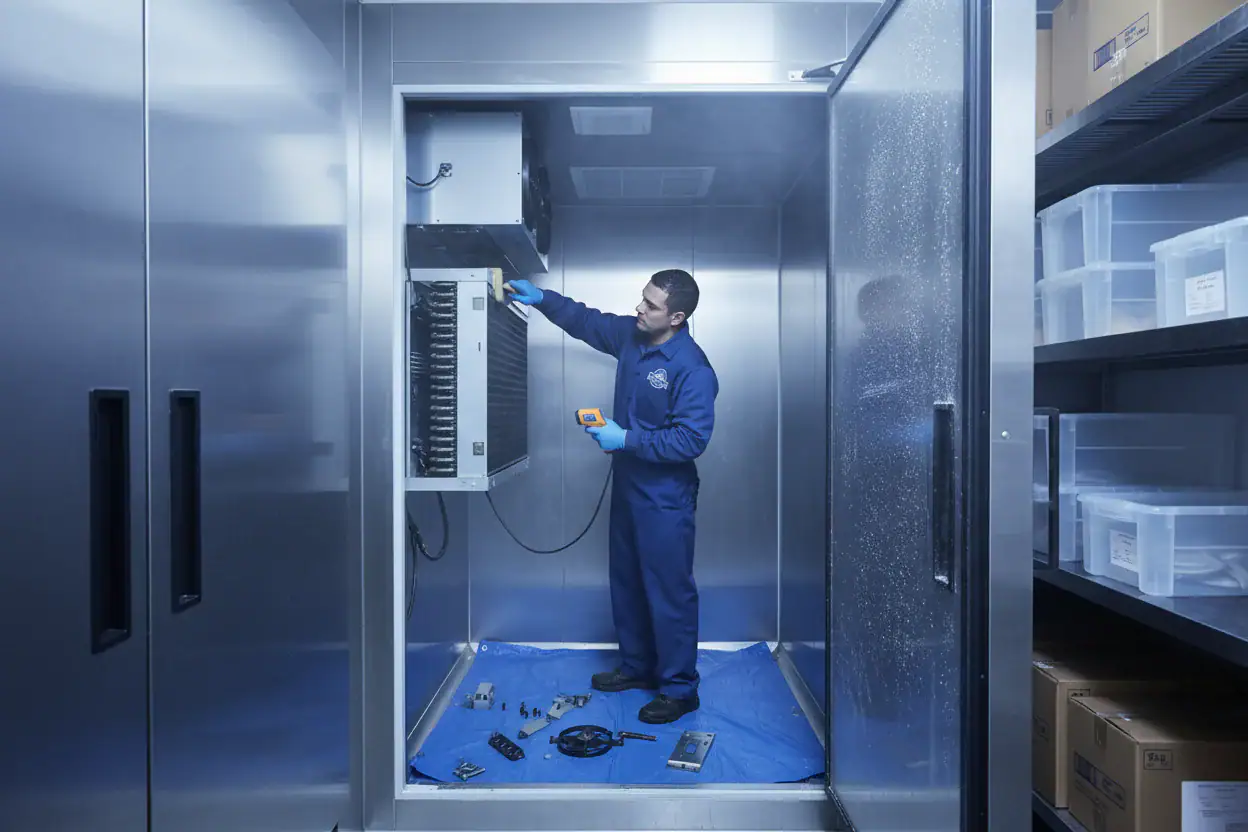
Your walk-in freezer breakdown isn’t just an inconvenience—it’s a direct hit to your bottom line. When temperatures fluctuate, you’re looking at hundreds or thousands in spoiled inventory, potential health code violations, and customers walking out the door.
A properly installed and maintained commercial freezer eliminates these costly surprises. You get consistent temperatures, extended product shelf life, and the peace of mind that comes from knowing your investment is protected. No more emergency calls at 3 AM because your freezer decided to quit during your busiest season.
Your food stays frozen. Your business stays profitable. Your stress levels stay manageable.
We’ve been the go-to commercial refrigeration specialist for Great Neck Gardens and the greater Long Island area for over four decades. We’ve seen every type of freezer failure, worked with every major brand, and solved problems that other companies walk away from.
What sets us apart isn’t just experience—it’s our understanding of what’s at stake for local businesses. From the busy delis on Northern Boulevard to the catering halls serving hundreds of guests, we know that when your freezer goes down, every minute counts. That’s why we offer 24/7 emergency service and maintain fully stocked service vehicles.
Our dozens of five-star reviews tell the real story: honest pricing, reliable service, and technicians who actually show up when we say we will.
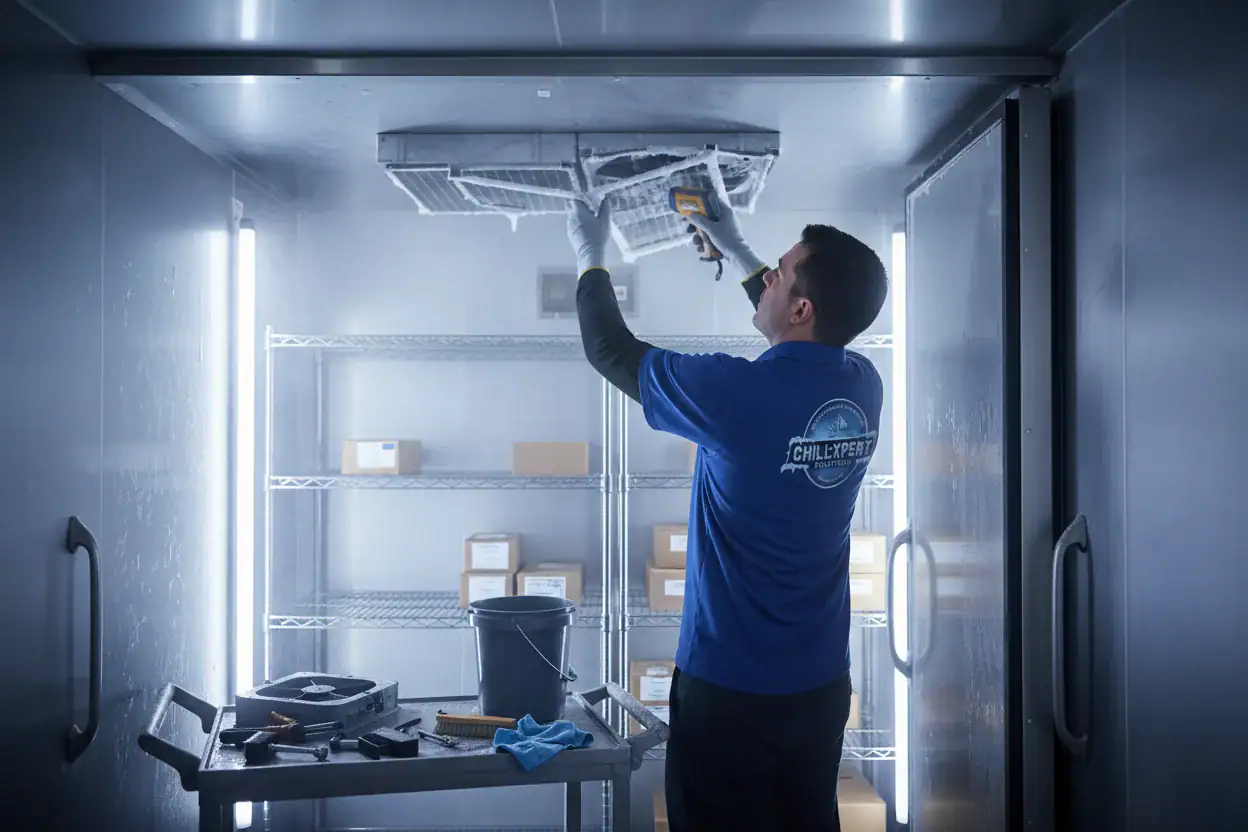
The process starts with an honest assessment of your space and needs. No overselling, no hidden costs—just a clear evaluation of what you actually need to keep your products at the right temperature. We measure your space, assess your electrical requirements, and factor in your daily volume to recommend the right size unit.
Installation happens on your schedule, not ours. Our certified technicians handle everything from permits to final testing, working around your business hours when possible. We coordinate with electricians, handle any necessary modifications, and make sure your new freezer is running perfectly before we leave.
After installation, you get a complete walkthrough of your system, maintenance recommendations, and our direct contact information for any questions. No waiting on hold or getting transferred—you deal directly with people who know your setup.
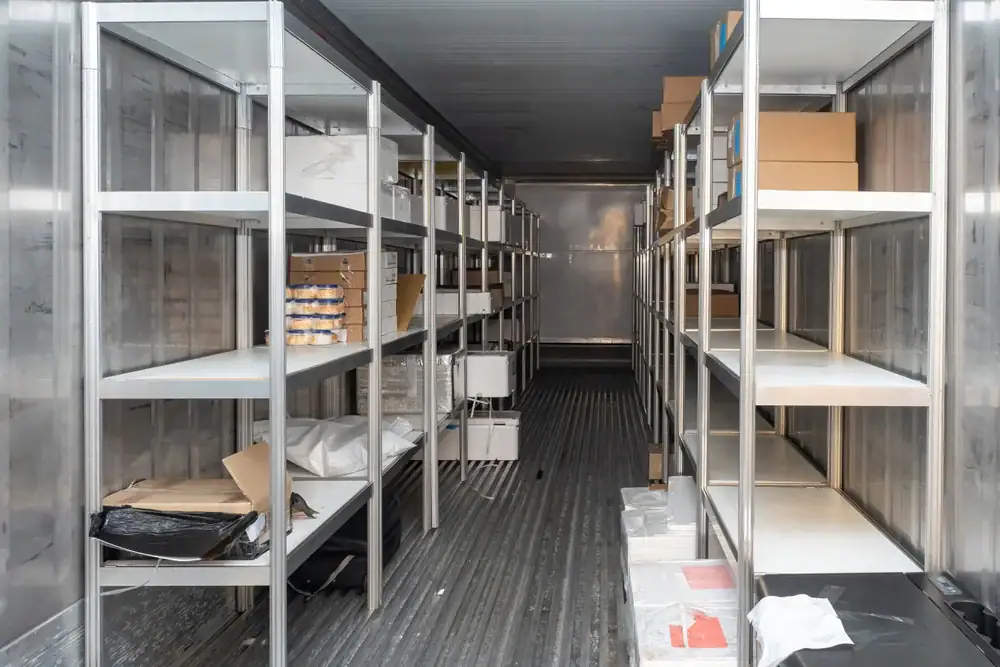
Ready to get started?
We handle everything from small reach-in units perfect for delis and sandwich shops to large industrial freezers that serve major catering operations. We work with all the leading brands and can source custom sizes when standard units won’t fit your space.
Great Neck Gardens businesses face unique challenges—older buildings with space constraints, high summer temperatures that stress cooling systems, and the constant pressure to maintain health department standards. Our solutions account for these local factors, from recommending higher-efficiency units for older buildings to installing backup systems for critical operations.
We also understand the seasonal demands of Long Island businesses. Summer wedding season, holiday catering, and tourist influx all put extra strain on refrigeration systems. Our maintenance programs are designed around these local patterns, with preventive service scheduled before your busy periods rather than during them.
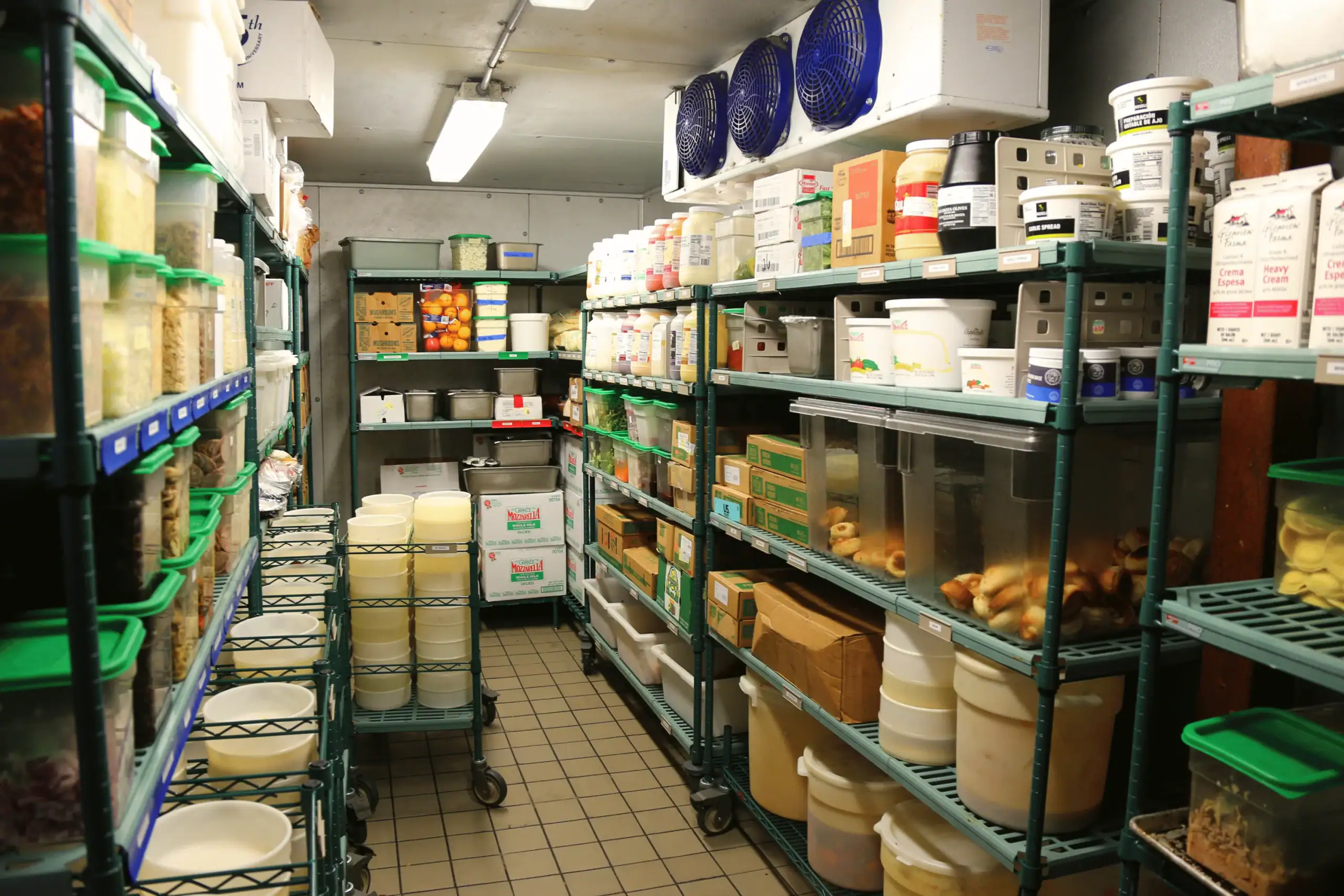
Walk-in freezer costs depend heavily on size and specific requirements, but most Great Neck Gardens businesses can expect to invest between $5,000 and $40,000 for a complete installation. A small 6×6 unit suitable for a deli or small restaurant typically runs $5,000 to $10,000, while medium-sized 10×10 units cost $8,000 to $15,000.
The final price includes more than just the freezer box—you’re paying for proper electrical work, permits, refrigeration system setup, and professional installation that meets local codes. Many businesses find that investing in a slightly larger unit upfront saves money compared to upgrading later as their needs grow.
Financing options are available, and the investment typically pays for itself through reduced spoilage and improved inventory management within the first year.
Door seal failures top the list of problems in Great Neck Gardens, especially during summer months when the temperature differential puts extra stress on sealing systems. When seals wear out, cold air leaks constantly, forcing your system to run continuously and driving up energy costs.
Drain line blockages are another frequent issue, particularly in freezer applications where ice can form and block drainage. This leads to water backup, ice buildup in wrong areas, and potential damage to your floors and inventory.
Temperature fluctuations often signal compressor problems or refrigerant leaks—issues that require immediate professional attention. The key is catching these problems early through regular maintenance rather than waiting for a complete breakdown that could cost thousands in spoiled inventory.
Professional maintenance should happen at least twice a year for most commercial freezers, with additional service scheduled before your busy seasons. Spring maintenance prepares your system for summer stress, while fall service ensures reliable operation through the holiday season.
Between professional visits, monthly checks of door seals, drain pans, and temperature logs help catch small problems before they become expensive repairs. Many Great Neck Gardens businesses save money by bundling maintenance with other HVAC services or signing up for annual service contracts.
The cost of preventive maintenance—typically $300 to $600 annually—is minimal compared to emergency repair bills or the cost of replacing spoiled inventory. Regular maintenance also extends equipment life from the standard 15 years to 20+ years with proper care.
Absolutely. Many Great Neck Gardens commercial buildings were constructed decades ago, and we have extensive experience adapting modern refrigeration systems to older structures. We regularly work with buildings that have limited electrical capacity, unusual layouts, or space constraints that rule out standard installations.
Solutions might include remote condensing units to reduce indoor heat load, custom-sized panels to fit existing spaces, or upgraded electrical service to handle modern equipment. We coordinate with local electricians and building inspectors to ensure all work meets current codes.
The key is proper planning and realistic expectations about what’s possible within existing constraints. Sometimes a custom solution costs more upfront but delivers better long-term performance than trying to force a standard unit into an unsuitable space.
Yes, we provide round-the-clock emergency service because we understand that freezer failures don’t wait for business hours. When your walk-in freezer fails at 2 AM on a Saturday, you need immediate response to protect thousands of dollars in inventory.
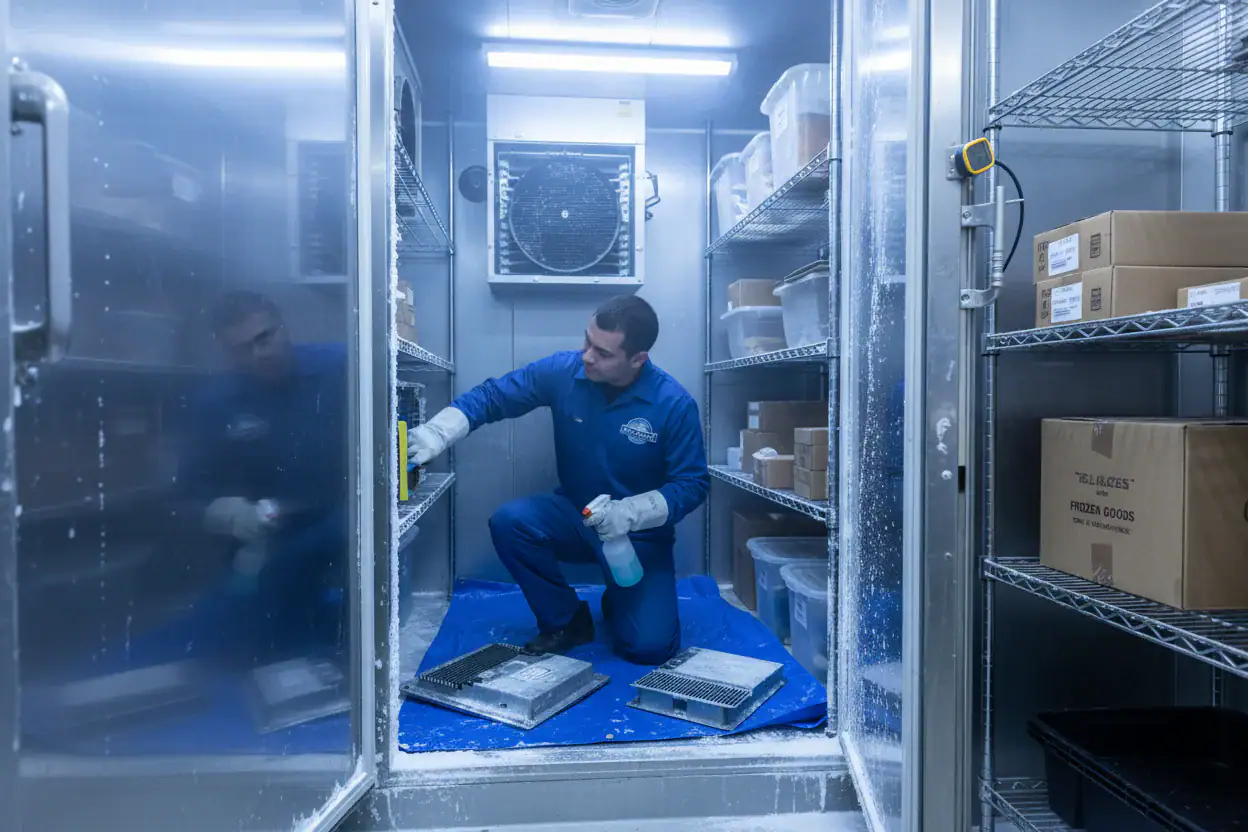
Our emergency technicians carry common parts and diagnostic equipment in fully stocked service vehicles, allowing us to resolve many problems on the first visit. For complex repairs requiring special parts, we can often implement temporary solutions to keep your products frozen until permanent repairs are completed.
Emergency service does carry premium pricing, but it’s typically far less expensive than replacing spoiled inventory or losing business due to health department issues. Most problems that seem like emergencies can be prevented through regular maintenance and early attention to warning signs.
The right size depends on your menu, delivery frequency, and peak volume rather than just square footage available. A restaurant serving 100 covers daily with twice-weekly deliveries needs different capacity than one serving 300 covers with daily deliveries, even if they have similar kitchen space.
As a starting point, plan for 20-30% more capacity than your current peak needs to handle growth and seasonal fluctuations. A 6×6 unit works for smaller operations, 8×10 or 10×10 handles most mid-sized restaurants, while larger operations may need 12×12 or custom sizes.
Consider your workflow too—a narrow, deep freezer might have the same square footage as a wider, shorter one, but the wider unit provides better organization and easier access during busy periods. The goal is finding the sweet spot between adequate capacity and manageable operating costs.