Not all AC repairs are created equal. Here's how to tell the difference between a real fix and a band-aid — and what to do when the same problem keeps coming back.
Share:
Summary:
You’ve already had this fixed. Or at least, that’s what you were told. The technician showed up, did something, collected a check, and left. A few weeks later — sometimes a few days — the same problem came back. Now you’re deciding whether to call the same company again or find someone who will actually get to the bottom of it.
This is more common than it should be. And it’s not always the result of bad intentions — sometimes it’s a rushed diagnosis, sometimes it’s the wrong part, sometimes it’s a technician who patched the symptom without looking for the cause. Either way, you’re the one dealing with the fallout.
Here’s what a real repair looks like, and how to avoid going through this again.
The most common reason an AC repair doesn’t hold is that the technician fixed what they could see without diagnosing what caused it. A refrigerant recharge is a good example. Refrigerant doesn’t get used up the way fuel does — if your system is low, there’s a leak somewhere. Adding more refrigerant without finding and sealing that leak is a temporary fix. It might cool your space for a few weeks. Then you’re right back where you started.
The same logic applies to electrical faults, failing capacitors, and airflow problems. A clogged or restricted system forces every other component to work harder than it should, which accelerates wear and creates cascading failures. Fix the airflow issue without addressing what caused it, and the compressor that was already under stress will eventually give out anyway.
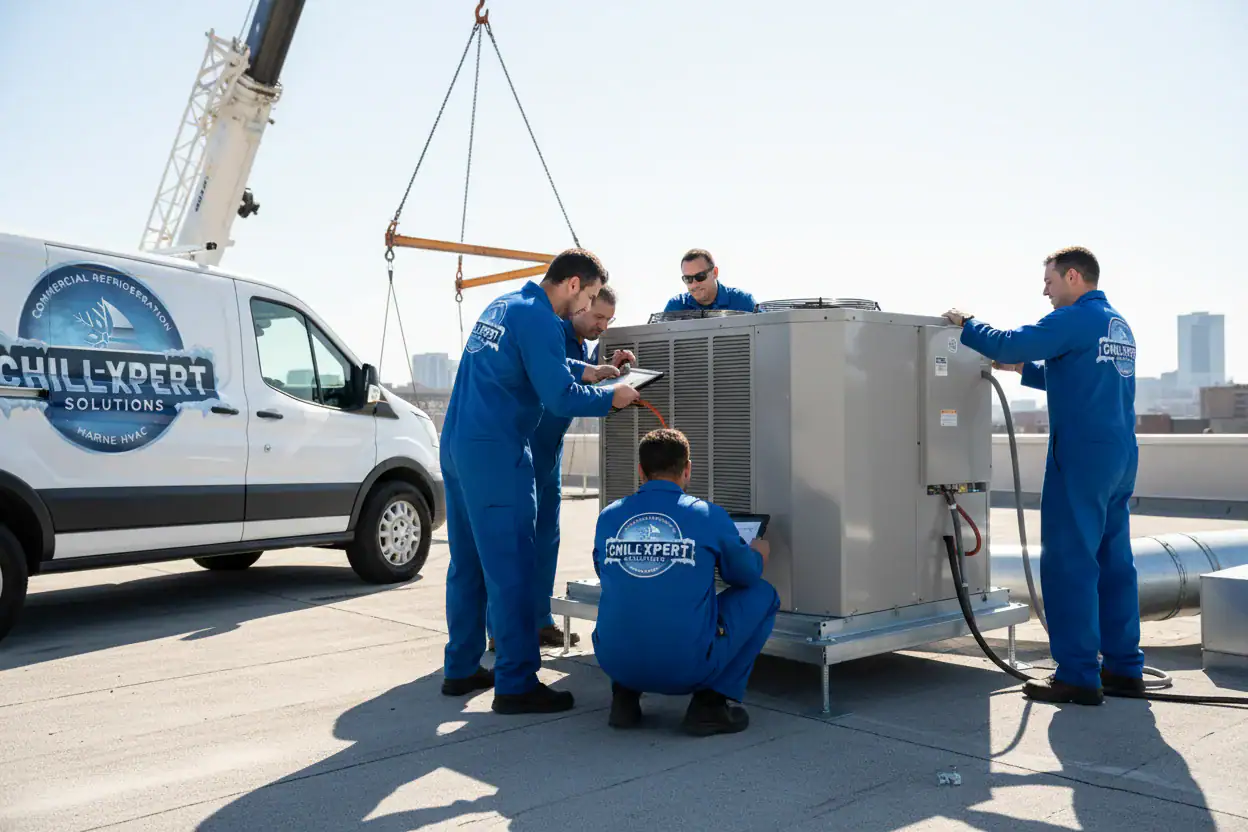
There’s another factor that doesn’t get talked about enough: the quality of the parts going into the repair. When a technician installs a mismatched or low-grade component to get the job done quickly, the system may run — but it won’t run the way it’s supposed to. Efficiency drops, wear accelerates, and the repair that seemed to work starts unraveling faster than anyone expected.
This is especially relevant for commercial operators across Nassau County, NY. A restaurant on Jericho Turnpike or a deli in Hempstead doesn’t have the luxury of a second breakdown two weeks after the first. When refrigeration goes down, inventory goes with it. When AC fails in a catering hall during a July event, there’s no graceful recovery. The financial consequences of a repeat failure are immediate and real.
Genuine, manufacturer-appropriate parts make a measurable difference. A component that’s designed for the specific system it’s going into will seat correctly, operate within the right tolerances, and last as long as it should. That’s not a premium — it’s just what a real repair requires. We keep an extensive parts inventory in our service vehicles specifically because waiting on a part order while a client’s walk-in cooler sits at the wrong temperature isn’t an option.
Intermittent electrical issues create their own version of this problem. A loose connection or a component that’s beginning to fail may not show up during a standard service visit — the system looks fine when the technician is standing in front of it. Then it fails again at 11 PM on a Friday. Diagnosing these kinds of faults takes experience and patience, not just a quick visual check and a cleared error code.
After 40 years working on commercial HVAC and refrigeration systems across Nassau County, NY and Long Island, we’ve seen this pattern more times than we can count. The call that comes in after a failed repair is almost always harder to fix — not because the underlying problem got worse, but because now there’s a layer of distrust to work through alongside the technical issue. Getting it right the first time is always the better path.
A proper diagnostic isn’t just checking the obvious. It starts with understanding what the system was doing before it failed — not just what it’s doing now. We ask questions: How long has it been running this way? Has this happened before? What changed before the problem started? The answers often point toward the root cause faster than any tool can.
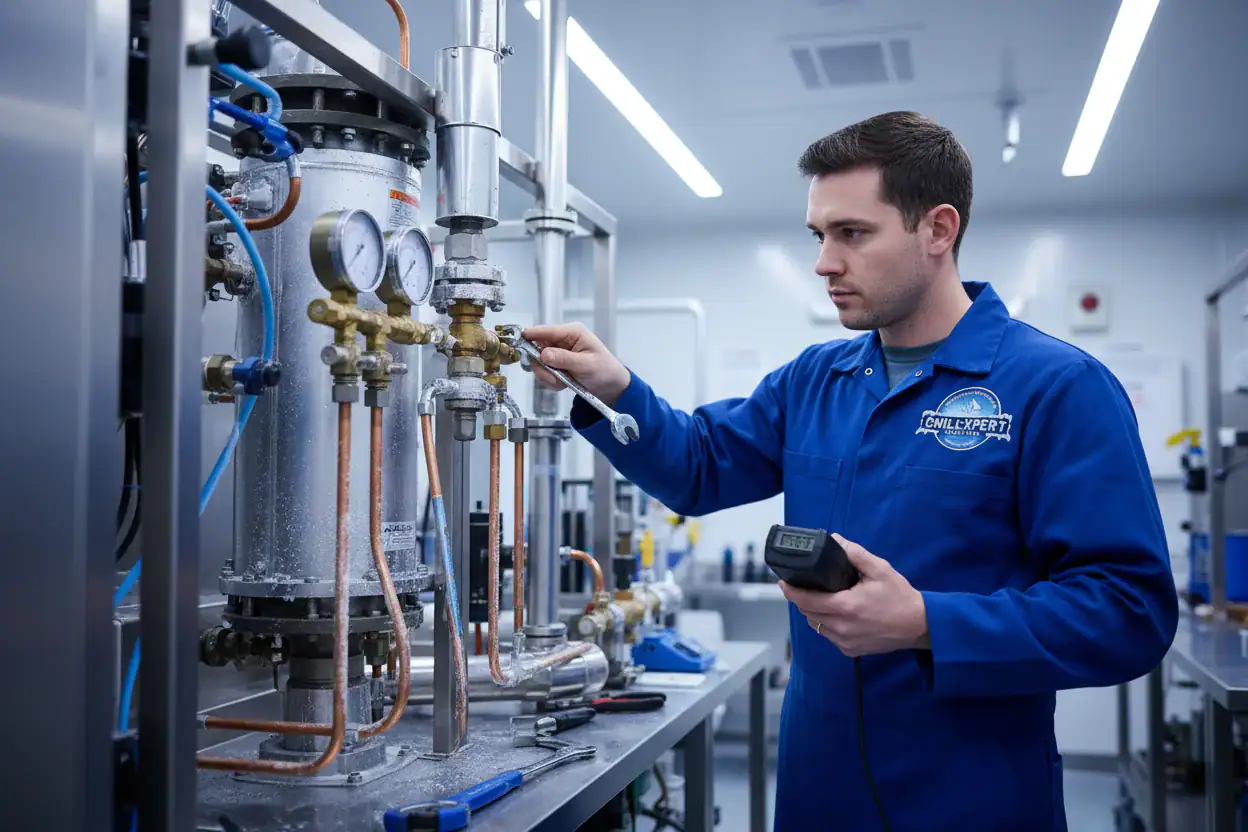
From there, a thorough inspection covers refrigerant levels and, critically, whether there’s a leak causing them to drop. It covers airflow through the evaporator and condenser coils, electrical connections at every relevant junction, the condition of the capacitor and contactor, and the compressor’s operating pressures. For commercial systems, it also means checking the controls, the thermostat calibration, and any building management system integrations that might be sending the wrong signals.
In Nassau County, NY, there’s an additional factor worth accounting for: the coastal environment. Salt air from Long Island Sound to the north and the Atlantic to the south accelerates corrosion on outdoor condenser units, refrigerant lines, and heat exchangers in ways that aren’t typical in inland markets. A system that looks structurally sound from the outside may have coil corrosion or refrigerant line degradation that’s quietly driving the failure. If your technician isn’t factoring in the local environment, they’re missing part of the picture.
A real diagnostic ends with a clear explanation — not a list of parts and a total, but an actual account of what was found, what caused it, and what we did to fix it. You should walk away from a service call understanding what happened to your system, not just trusting that it’s been handled. That transparency is what separates a contractor you’ll call back from one you’ll avoid.
Want live answers?
Connect with a Chill Xpert Solutions expert for fast, friendly support.
Most AC failures don’t happen without warning — they happen because the warnings were missed or ignored. Routine aircon servicing exists specifically to catch the small issues before they become the expensive ones. A dirty filter that’s reducing airflow, a capacitor that’s reading low, a coil that’s starting to ice over — none of these are emergencies on their own. Left unaddressed, each one puts the rest of the system under stress until something gives.
For commercial operations across Nassau County, NY — restaurants, delis, catering halls, airport-adjacent facilities — the math on preventative maintenance is straightforward. The cost of a scheduled service visit is a fraction of the cost of an emergency repair, and both are a fraction of the cost of a full system failure during peak service hours. Scheduled maintenance also extends equipment life, which matters when you’re looking at the cost of replacement.
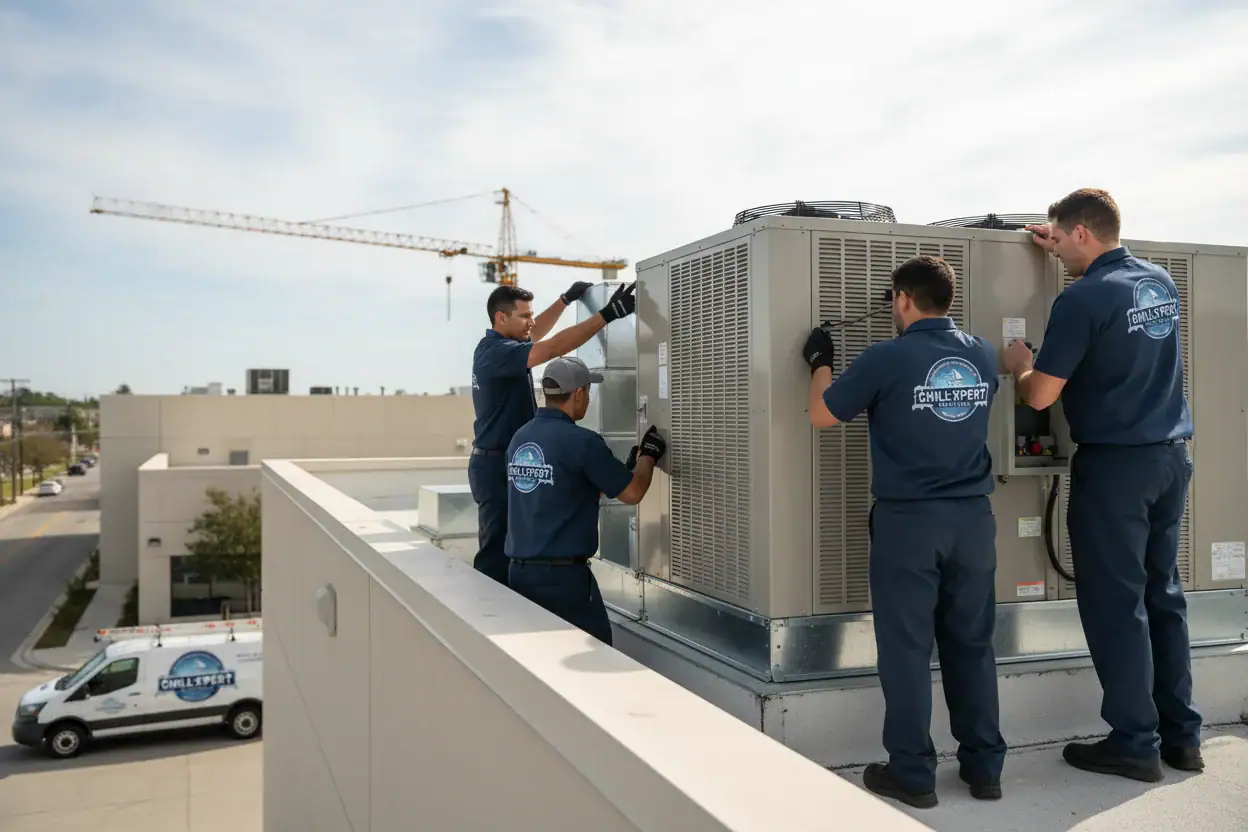
The honest answer is: more often than most people think, and definitely more often than once a year. For commercial systems running heavy loads in Nassau County, NY’s humid summer climate, a twice-yearly service schedule — once before the cooling season and once after — is a reasonable baseline. Systems under heavier load, like those serving commercial kitchens or high-occupancy event spaces, benefit from quarterly check-ins.
Nassau County, NY’s summer humidity creates a compounding challenge for air conditioning systems. The system isn’t just cooling the air — it’s actively dehumidifying it, which increases runtime, increases wear, and means any existing inefficiency gets amplified. A system that’s running at 90% efficiency in a dry inland climate might be working significantly harder than that in Bayville or Hewlett Neck, where the air coming off the water carries real moisture load through July and August.
The timing of service matters, too. A system that hasn’t been inspected since the previous fall may have developed corrosion, pest intrusion, or debris accumulation over the winter. Running it hard on the first genuinely hot day of June without a pre-season inspection is how systems that “seemed fine” end up failing on the hottest weekend of the year — when every other HVAC company in Nassau County, NY has a two-week waiting list.
We offer free estimates and upfront pricing before any work begins, so there’s no guesswork about what a service visit will cost. The goal is to make maintenance easy enough to actually happen on schedule, not something that gets deferred until there’s a problem.
The most common mistake general contractors make when attempting boat AC repair is treating the system like a miniaturized version of what they work on every day. The components may look similar, but the operating environment is fundamentally different, and the tolerances are tighter. Saltwater exposure degrades connections and coils faster. Vibration from the vessel affects components differently than a fixed installation. And the access constraints on most boats mean that a repair that takes twenty minutes on a rooftop unit might take two hours in a confined engine compartment.
For yacht owners along the Gold Coast communities of Nassau County, NY — Bayville, Sands Point, Old Brookville — or boat owners keeping their vessels at South Shore marinas, finding a contractor who actually knows what they’re doing with marine AC isn’t a minor convenience. It’s the difference between a repair that holds through the season and one that fails on the water.
We’ve worked on marine systems across Nassau County, NY and the broader Long Island waterfront for decades — from recreational boats to yacht club facilities to commercial marine operations. That experience means we know what to look for, what to carry in the service vehicle, and how to do the job in conditions that would stump a contractor who’s never worked below deck.
If you’ve been told by a general HVAC company that they can handle your boat’s AC, it’s worth asking a few questions before they start: Have they worked on marine systems specifically? Do they understand the corrosion factors in a saltwater environment? Do they carry parts designed for marine applications? The answers will tell you a lot about whether you’re getting a real repair or an experiment.
The pattern of repeat service calls isn’t inevitable. It’s the result of rushed diagnostics, wrong parts, and contractors who treat every system the same regardless of what it actually needs. When you know what a real repair looks like — root cause diagnosis, appropriate parts, clear explanation of what was found — you’re in a much better position to evaluate who’s worth calling.
For Nassau County, NY homeowners and commercial operators, the stakes are real. A failed repair during a July heat wave, a walk-in cooler that goes down before a catering event, a boat AC that quits at the dock — these aren’t abstract inconveniences. They cost money, time, and in commercial settings, sometimes customers.
If you’re dealing with a system that keeps having the same problem, or you want a second opinion before committing to a repair or replacement, reach out to Chill Xpert Solutions. We’ll tell you what we find, what it will take to fix it, and what you can expect going forward — no pressure, no guesswork.
Article details:
Share:
Continue learning: