Budgeting for restaurant HVAC in Nassau County? Costs vary widely based on size, kitchen demands, and ventilation needs—here's what to expect.
Share:
Summary:
Your restaurant’s HVAC system isn’t just about keeping customers comfortable. It’s about maintaining food safety temperatures, managing kitchen heat that would make a standard office system quit in a week, and handling grease-laden air that requires specialized ventilation most contractors have never installed. When you’re budgeting for a new restaurant or replacing failing equipment in Nassau County, you need real numbers—not guesswork. The costs vary dramatically based on your kitchen’s demands, square footage, and whether you’re starting from scratch or working with existing infrastructure. Here’s what actually determines what you’ll pay, and why restaurant HVAC is a different beast than the system in an office building down the street.
Restaurant HVAC costs range from $15,000 for a small quick-service operation to well over $120,000 for a full-service establishment with extensive kitchen equipment. That’s not a pricing range—it’s a reflection of completely different system requirements.
Your kitchen drives the cost more than anything else. A 2,000-square-foot restaurant needs more cooling capacity than a 5,000-square-foot office because of the heat generated by ovens, fryers, ranges, and grills running simultaneously during service. Commercial cooking equipment produces massive thermal loads that standard HVAC systems can’t handle.
Square footage matters, but kitchen intensity matters more. A quick-service restaurant with limited cooking equipment in 1,500 square feet might need a $20,000 system, while a full-service restaurant with the same footprint but extensive kitchen operations could require $40,000+ in HVAC infrastructure.
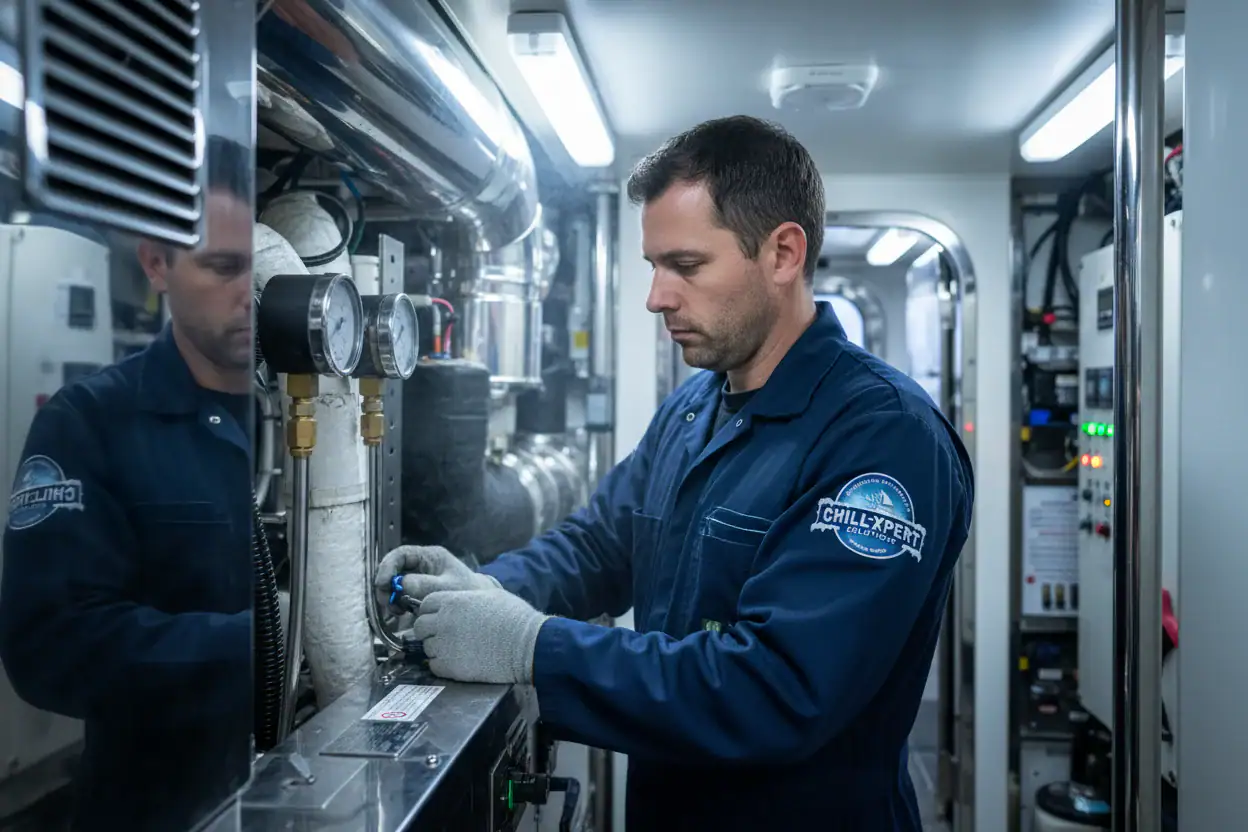
Commercial kitchen HVAC cost includes components most business owners don’t anticipate when they’re budgeting based on dining room square footage alone. The kitchen exhaust hood system represents a significant portion of your total investment, and it’s required by code—not optional.
Hood systems run $950 to $1,200 per linear foot for basic installations. That’s just the hood itself with standard exhaust. A complete turnkey system including ductwork, rooftop exhaust fans, makeup air units, and fire suppression averages $4,000 to $5,000 per linear foot. A standard 10-foot hood over your cooking line translates to $10,000 to $50,000 depending on complexity and code requirements.
Makeup air units add another layer of cost that catches restaurant owners off guard. When your exhaust hood pulls thousands of cubic feet of air per minute out of the kitchen, that air has to be replaced. Without proper makeup air, you create negative pressure that interferes with equipment operation, makes doors hard to open, and creates uncomfortable drafts in the dining room. Makeup air units cost $19,000 or more for systems that properly balance your ventilation.
Fire suppression systems are mandatory for Type I hoods over grease-producing equipment like fryers and griddles. These automated systems detect fires and deploy suppression agents before a grease fire spreads. Installation typically runs around $7,900, and it’s non-negotiable for Nassau County health department approval.
The dining room HVAC system operates separately from kitchen ventilation but must be sized to handle the heat migration from the kitchen and the occupancy loads during peak service. Zoned systems that provide extra cooling near the kitchen while maintaining comfortable temperatures in the dining room cost more upfront but prevent the hot-and-cold spots that make customers uncomfortable.
Ductwork complexity affects your final bill significantly. Single-story buildings with direct rooftop access for exhaust installation keep costs lower. Multi-story buildings or locations where ductwork must run long distances to reach an acceptable exhaust point can add $10,000 to $30,000 to your project.
Electrical capacity often requires upgrades for restaurant HVAC systems. Your existing panel might not provide enough power for the cooling capacity and ventilation equipment a commercial kitchen demands. Panel upgrades or new service from your utility provider add $10,000 to $30,000 and require 4-8 weeks for coordination.
Restaurant ventilation system cost goes beyond the hood you see above the cooking line. The complete system includes exhaust hoods, ductwork, rooftop fans, makeup air units, and controls that work together to remove heat, smoke, and grease-laden air while maintaining proper air balance throughout your space.
Type I hoods handle grease-producing appliances and require grease-rated ductwork, fire suppression systems, and specific clearances from combustible materials. Type II hoods serve equipment that produces heat and steam without grease—like dishwashers and steamers—and have different code requirements. Understanding which hood type your equipment requires affects both cost and installation complexity.
Exhaust fan capacity must match your cooking equipment’s heat and grease output. Undersized fans fail to capture smoke and grease effectively, leading to health code violations and uncomfortable working conditions. Oversized fans waste energy and create excessive negative pressure. Proper sizing requires calculations based on your specific appliances, not guesswork.
Ductwork design impacts both installation cost and long-term operating efficiency. Extended duct runs, multiple bends, and vertical rises all increase the fan power required to move air effectively. In Nassau County, rooftop exhaust is common, but some locations require ductwork to run horizontally before reaching an acceptable discharge point. Complex duct layouts add $5,000 to $15,000 to installation costs.
Makeup air integration represents one of the most commonly overlooked costs in restaurant ventilation. Many jurisdictions, including Nassau County, require makeup air systems with electrical interlocks so makeup air is provided whenever exhaust runs. Basic non-tempered makeup air units cost less but introduce unconditioned outdoor air directly into your space. Tempered makeup air units that heat or cool replacement air cost significantly more but reduce the load on your primary HVAC system and improve comfort.
Demand-controlled ventilation adjusts exhaust rates based on actual cooking activity rather than running at maximum capacity continuously. These systems can reduce ventilation energy consumption 20-40% compared to constant-volume systems, but they require variable-speed fans and sophisticated controls that increase upfront investment. The energy savings typically justify the additional cost within 2-3 years for high-volume operations.
Code compliance adds time and cost to every ventilation project. Nassau County requires mechanical and electrical permits for HVAC installations, with processing times averaging 4-8 weeks and fees around $300 for plan review plus additional charges based on project scope. Multiple inspections occur throughout installation—rough-in inspection after ductwork is complete, and final inspection after all work is finished. Failed inspections mean work stops until issues are corrected, which is why working with contractors who understand local codes prevents costly delays.
Want live answers?
Connect with a Chill Xpert Solutions expert for fast, friendly support.
Commercial HVAC maintenance cost for restaurants runs $1,000 to $10,000 annually depending on system size, complexity, and service frequency. That’s not an optional expense—it’s the difference between equipment that lasts 15-20 years and systems that fail after 10-12 years with much higher emergency repair costs along the way.
Restaurant systems need more frequent attention than typical commercial equipment because kitchen grease, dust from foot traffic, and outdoor pollutants fill filters faster. Clogged filters force systems to work harder, increasing energy costs by up to 15% while reducing equipment lifespan.
Most restaurants benefit from quarterly maintenance visits, with comprehensive preventive maintenance performed at least twice per year—before cooling season and before heating season. High-volume kitchens may need monthly filter checks and more frequent inspections to maintain peak efficiency.
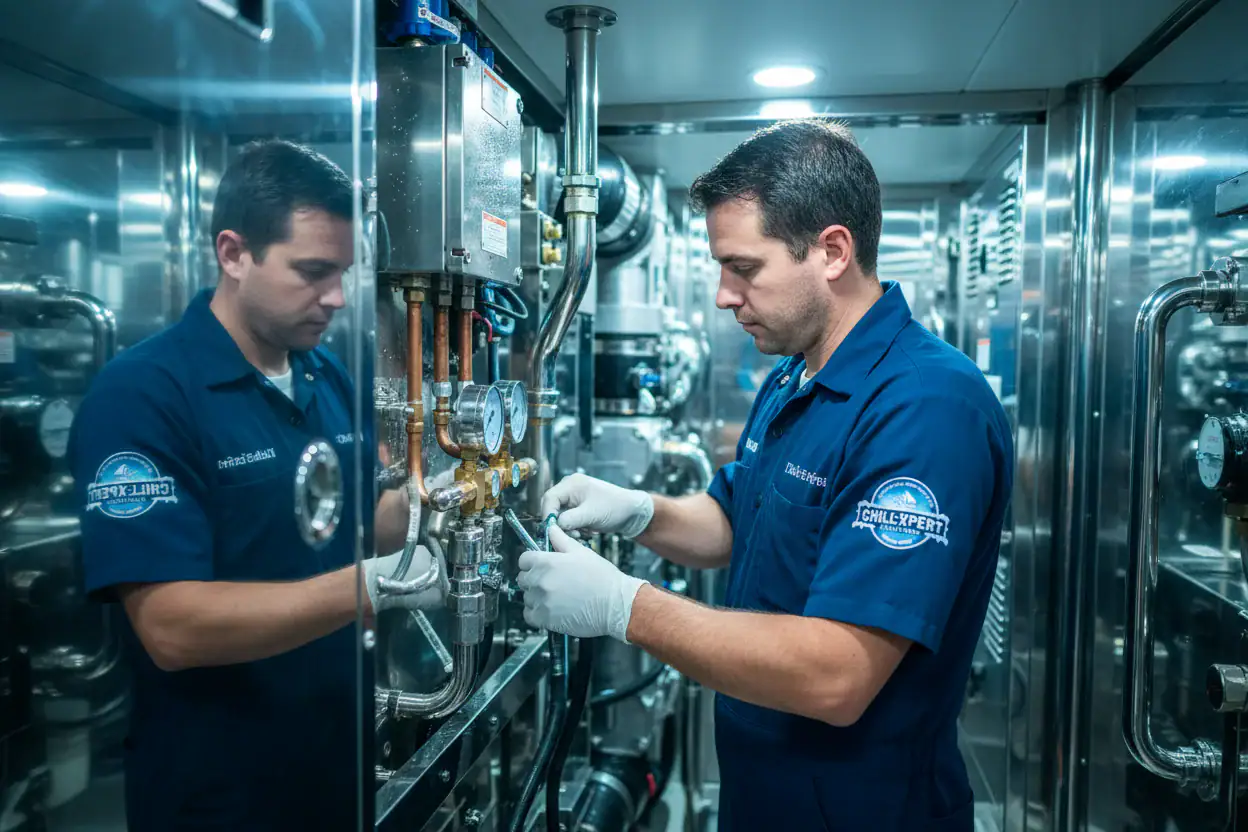
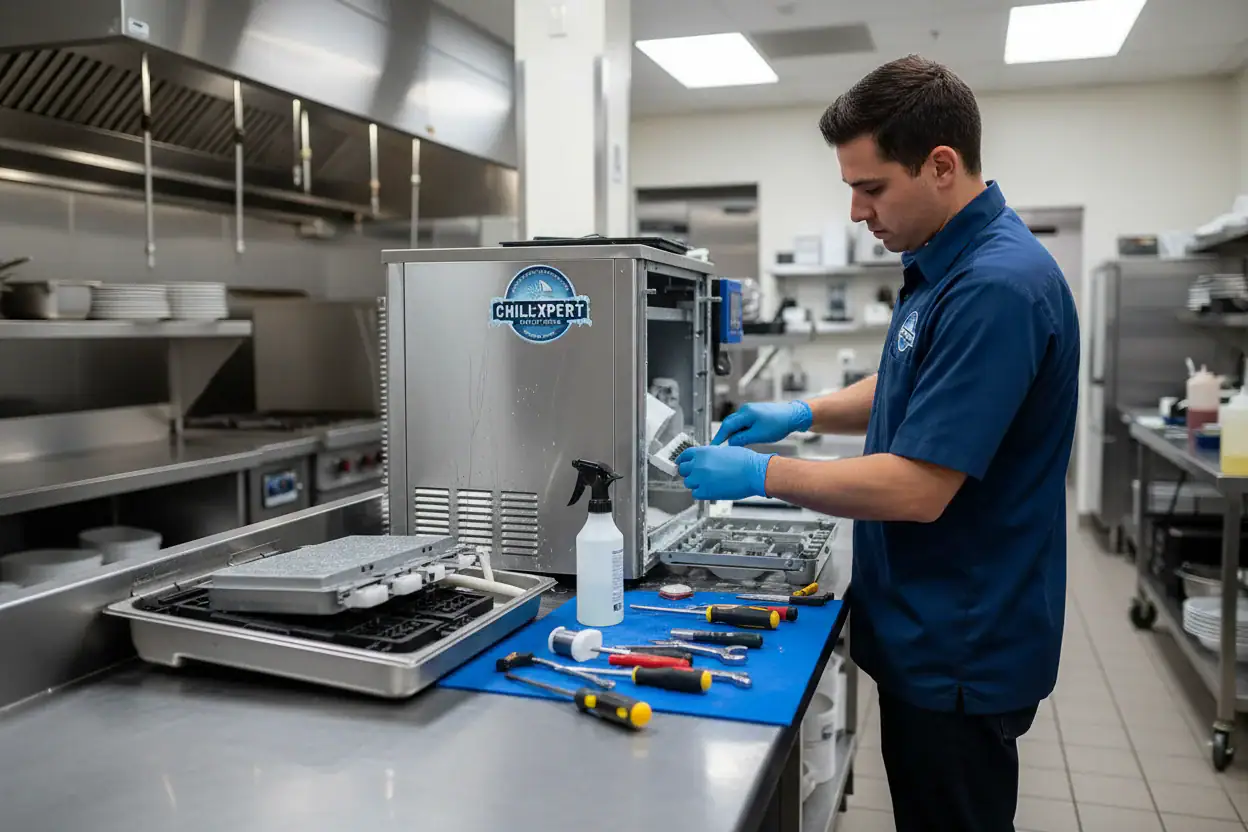
Maintenance visits include filter changes, coil cleaning, refrigerant level checks, thermostat calibration, and ductwork inspection for leaks. Technicians also check electrical connections, test safety controls, and verify that all components operate within manufacturer specifications.
For restaurants, hood cleaning represents a separate but critical maintenance requirement. Professional hood cleaning should occur quarterly for most operations, with costs running $400 to $600 per cleaning. Grease buildup in hoods and ductwork creates fire hazards and reduces exhaust efficiency, which directly impacts your HVAC system’s ability to maintain dining room comfort.
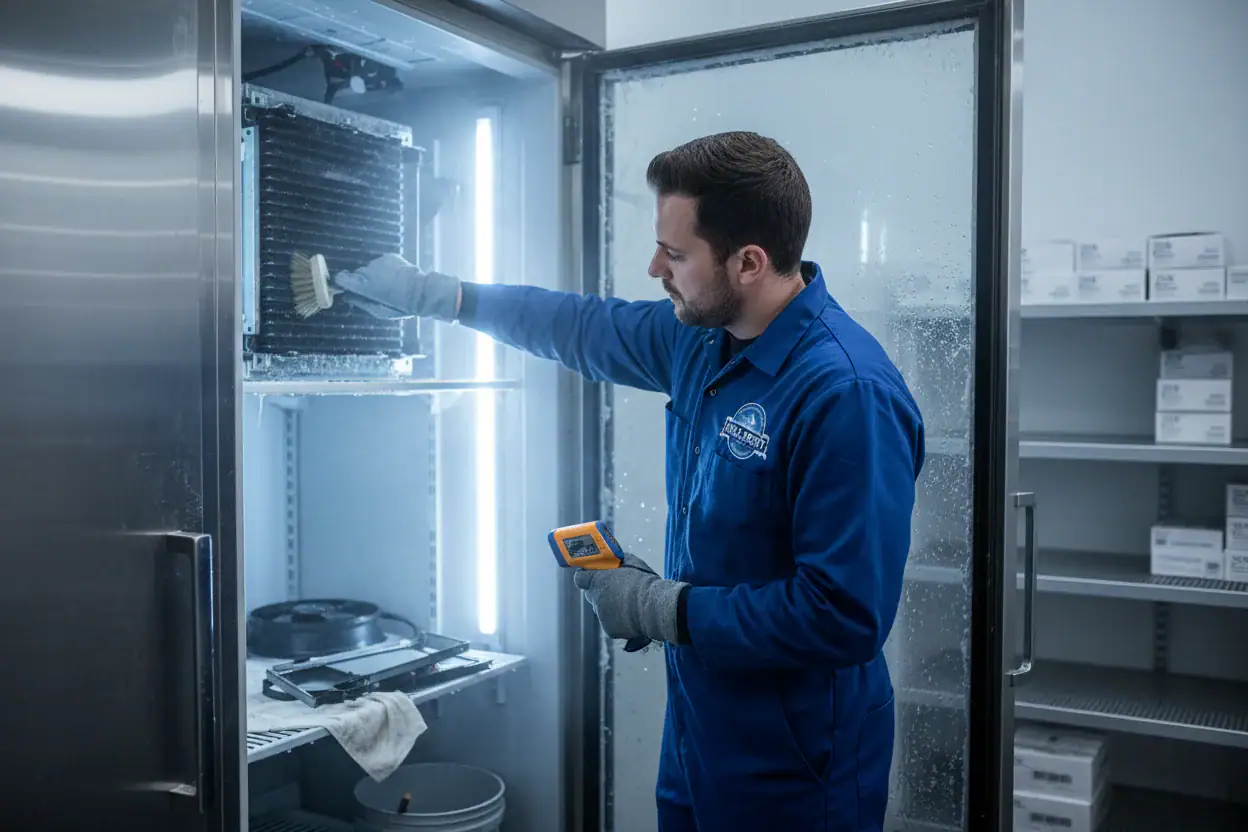
Walk-in cooler and freezer maintenance prevents the equipment failures that cost thousands in spoiled inventory. Condenser coil cleaning, door seal inspection, and refrigerant checks keep refrigeration systems running efficiently. Neglected refrigeration systems consume up to 20% more energy than properly maintained units.
Energy monitoring identifies problems before they become failures. That oven drawing 20% more power than normal signals a deteriorating heating element. A fryer with gradually increasing energy consumption indicates declining oil quality making the system work harder. Catching these issues early prevents emergency replacements during dinner service.
Preventive maintenance catches small issues—worn belts, low refrigerant, loose electrical connections—before they cause compressor failures, motor burnouts, or complete system shutdowns. Emergency repairs typically cost 2-3 times more than planned repairs due to after-hours labor rates, rush parts ordering, and the secondary damage caused by running equipment past its failure point.
Restaurants with structured preventive maintenance programs report 50-70% fewer emergency service calls compared to those who wait until equipment fails. The upfront cost of maintenance contracts is minimal compared to replacing a walk-in cooler five years early or losing a weekend’s revenue because your dining room AC failed during Saturday dinner service.
Maintenance contracts typically include priority service, discounted repair rates, and detailed reporting that helps you budget for eventual replacements. When you have a relationship with a contractor who knows your equipment and your operation, emergency calls get faster response because the technician already understands your system configuration.
Energy costs represent 3-5% of restaurant revenue, making them one of the largest controllable expenses after food and labor. HVAC systems account for 25-40% of restaurant energy consumption, with refrigeration adding another 30-50%. Understanding these operating costs helps you evaluate whether higher-efficiency equipment justifies the additional upfront investment.
Restaurants use 2.5 to 10 times more energy per square foot than typical commercial buildings because of kitchen equipment, extended operating hours, and the need to maintain specific temperature zones simultaneously. A restaurant spending $60,000 annually on energy typically wastes $12,000 to $18,000 on equipment running during closed hours and inefficient HVAC operation.
High-efficiency HVAC systems cost more initially but deliver measurable ROI through lower utility bills. Upgrading from a standard-efficiency system to a high-efficiency model might add $5,000 to $15,000 to installation costs, but the energy savings often reach $2,000 to $5,000 annually. That translates to payback periods of 2-4 years, with continued savings throughout the equipment’s 15-20 year lifespan.
Variable-speed equipment adjusts capacity to match actual demand rather than running at full power continuously. These systems reduce energy consumption 30-50% compared to single-speed equipment while providing better temperature control and humidity management. The technology costs more upfront but makes financial sense for restaurants operating 12+ hours daily.
Smart controls and programmable thermostats prevent the common problem of HVAC systems running at full capacity during closed hours. Temperature setbacks during overnight periods allow equipment to reduce operation while maintaining acceptable conditions for food safety. Bringing the dining room from setback to comfortable temperatures before opening requires less energy than maintaining full conditioning 24/7.
Proper system sizing prevents the energy waste that occurs when equipment is oversized or undersized for actual loads. Oversized systems cool spaces quickly but short-cycle, failing to run long enough to remove humidity effectively. Undersized systems run continuously without achieving comfortable conditions, wasting energy without delivering results. Load calculations based on your specific equipment, occupancy, and building characteristics ensure systems are sized correctly.
Demand charges represent a hidden cost that many restaurant owners don’t understand until they see their utility bills. Commercial electricity rates include charges based on peak demand—the highest 15-minute power spike during the billing period. When multiple high-draw items like ovens, fryers, and HVAC compressors run simultaneously during lunch or dinner rush, that single spike sets your demand charge for the entire month. Strategic equipment scheduling and demand management can reduce these charges significantly.
Long Island’s climate creates specific challenges for restaurant HVAC systems. Summer humidity makes cooling systems work harder to maintain comfort, while winter heating demands increase when makeup air introduces cold outdoor air to replace kitchen exhaust. Systems designed for local climate conditions deliver better performance and lower operating costs than generic installations.
Restaurant HVAC costs reflect the reality of commercial kitchen demands, ventilation requirements, and the need for systems that operate reliably during your busiest revenue-generating hours. Understanding the complete cost picture—installation, maintenance, and energy expenses—helps you budget accurately and avoid the expensive surprises that come from working with contractors who don’t specialize in restaurant applications.
The investment makes sense when you consider what’s at stake. Equipment failure during Saturday dinner service doesn’t just mean uncomfortable customers—it means lost revenue, spoiled inventory, and potential health code violations. Systems designed properly from the start, maintained consistently, and serviced by specialists who understand restaurant operations deliver 15-20 years of reliable performance.
For Nassau County restaurant owners evaluating HVAC costs or dealing with aging equipment that’s costing too much to operate, working with experienced commercial refrigeration and HVAC specialists makes the difference between a system that supports your operation and one that creates constant problems. We’ve been handling complex restaurant HVAC installations and emergency repairs across Nassau and Suffolk County for over 40 years, with the specialized expertise and 24/7 availability that restaurant operations require.
Article details:
Share:
Continue learning: